










The
Republic of Fiji
The Fiji archipelago lies in the southern Pacific
Ocean and is part of the Oceania landmass. Fiji
lies approximately 3100 km northeast of Sydney,
Australia, and 5000 km southwest of Honolulu,
Hawaii.
Islands
Fiji consists of over 300 islands (18 270 km2
of land in total) of which only 120 are inhabited.
Approximately 80% of all private land here is
owned by indigenous Fijians.
The three largest and most populated of the islands
are...
- Viti Levu is
the largest island, and the capital Suva is
situated here.
- Vanua Levu is
the second-largest
- Taveuni Island
- The ‘garden island’ - is the third
largest island, and the home of Taveuni Estates.
Taveuni Island lies approximately 140km from
Viti Levu.
Fiji declared its independence in 1970, after
a century as a British Colony. The population
is almost evenly split between indigenous Fijians
and Indo-Fijians, descendants of plantation workers
brought by the British. The resulting culture
is strongly influenced by both sectors of society
from the heady spices used in much of the food
to the traditional religious beliefs still held
by many native Fijians.
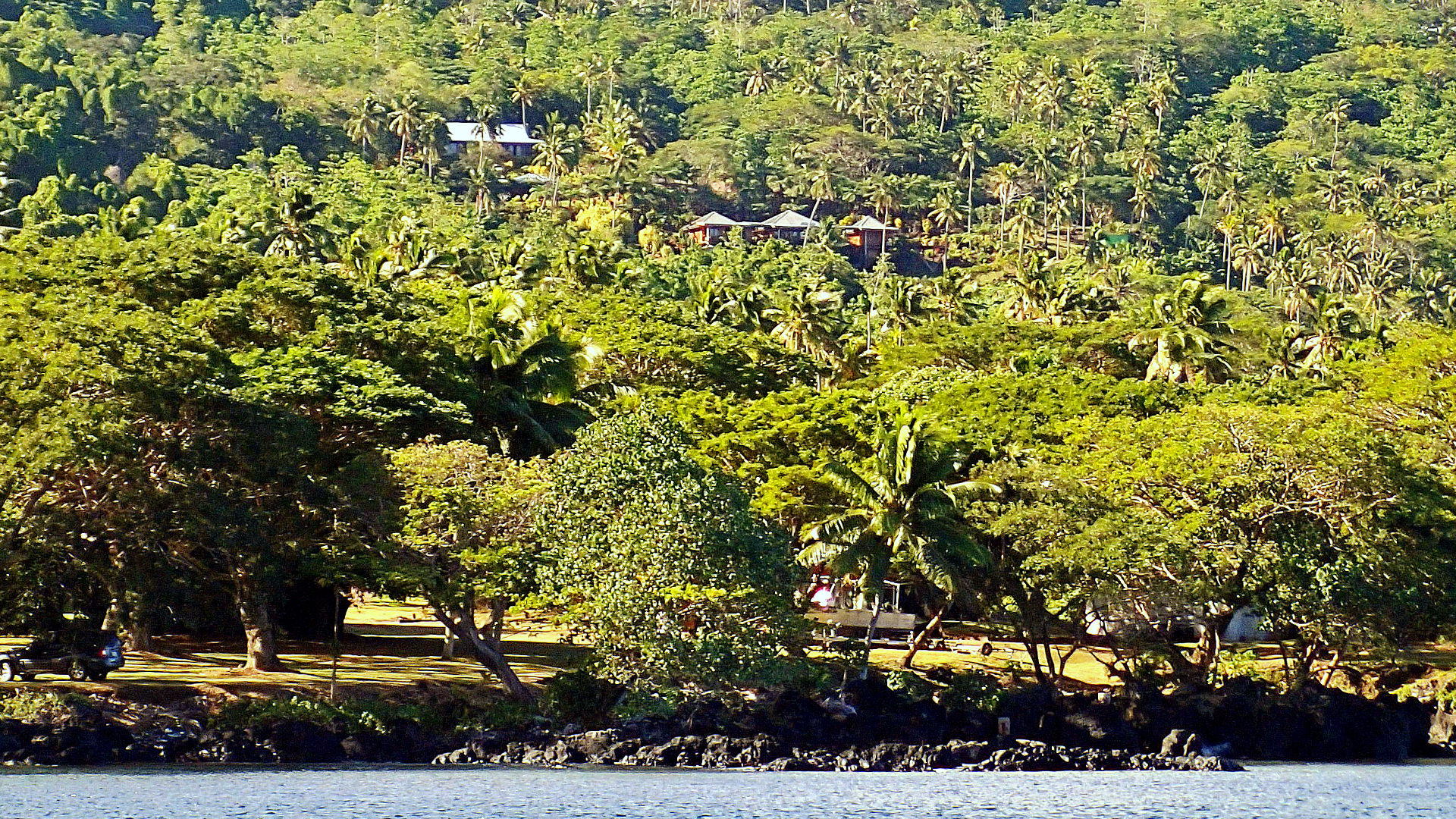
Almost 65% of land in Fiji consists of lush forest.
The archipelago’s main economic resources
include sugar, timber and tourism, with the latter
playing an increasingly important role.
Island style
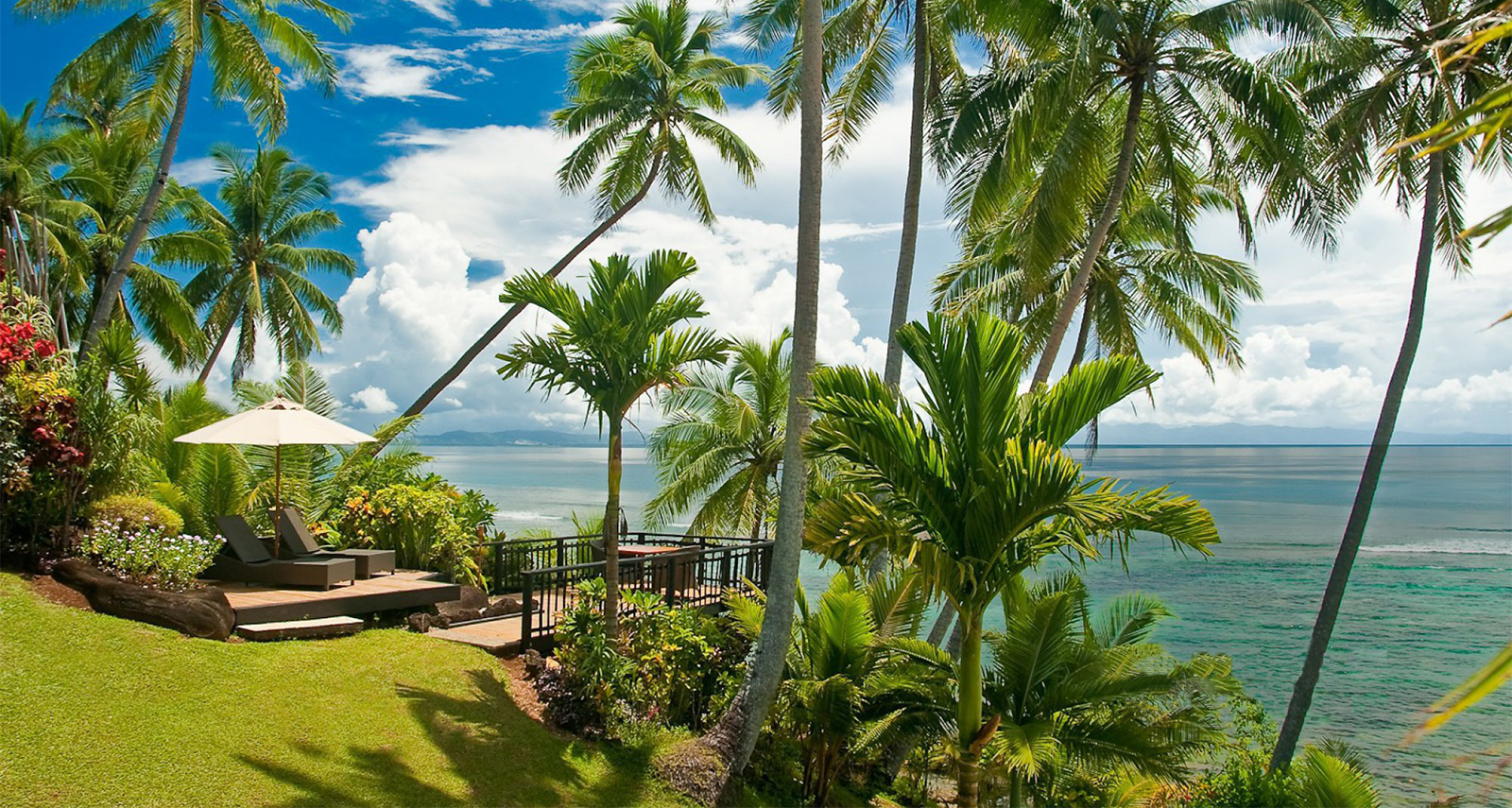
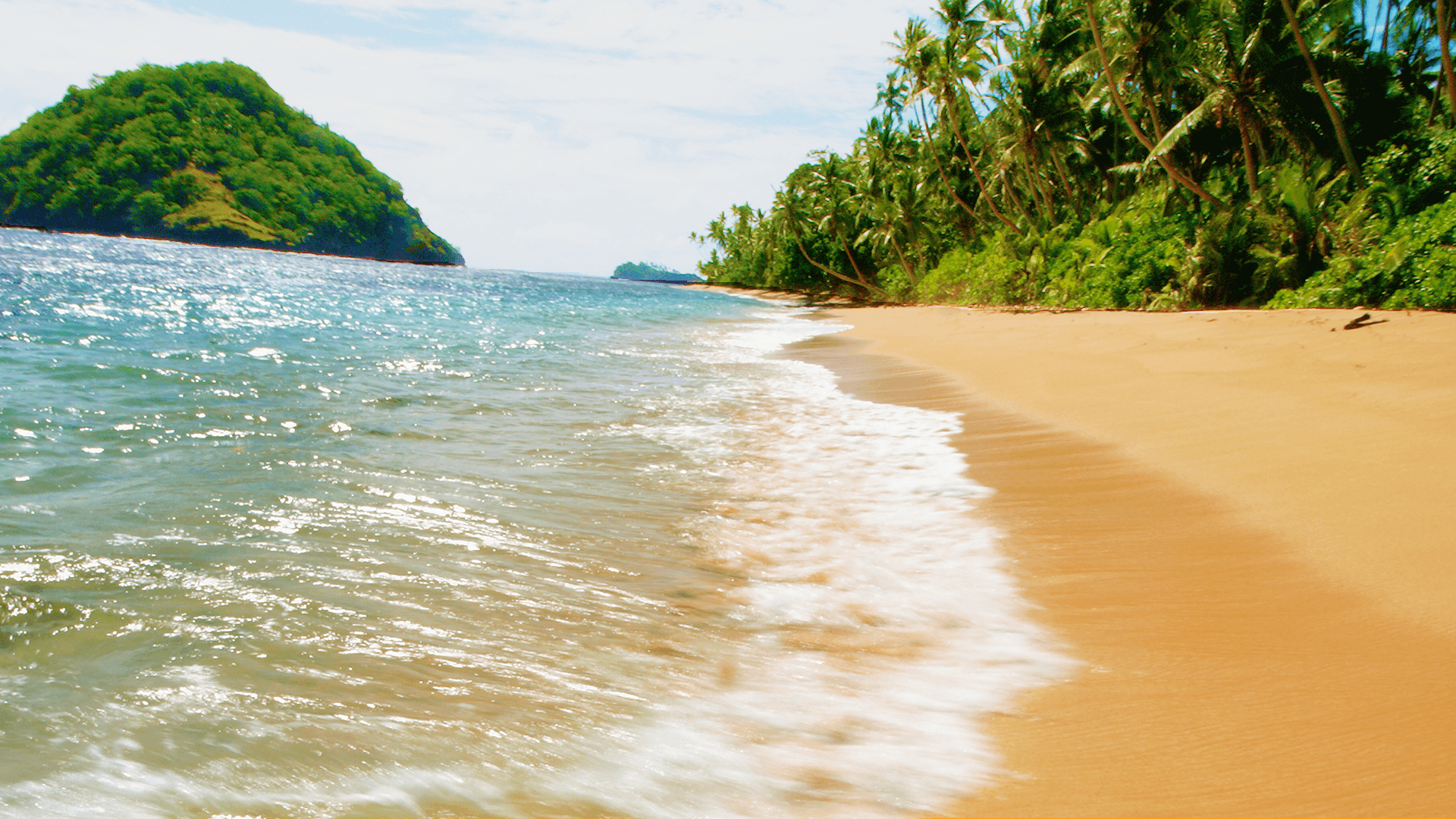
Is Fiji all blue lagoons,
turquoise waters and untouched coral reefs? It
is, and so much more!
Fiji enjoys a typically tropical climate with
lows of 25° and highs of 30° depending
on the season.
The islands are the result of volcanic activity
in the area millions of years ago. This accounts
for the dramatic mountainscapes on the larger
islands as well as the abundance of fertile soil
- the lifeblood of the lush tropical forests and
much of the sustainable agriculture practised
in the region.
With most of the population based on the main
island of Viti Levu, many visitors opt to get
away from it all and experience a taste of more
traditional Fijian life on an outer island.Traditionally
visitors will stay at small resorts with established
infrastructures for paying guests.
Many foreigners are now opting to put down roots
in the region with developments likeTaveuni Estates
catering for this market.
Escape to Eden
Those who’d like to combine a visit to this
virtual garden of Eden with some cultural input
are in good hands.
A warm local welcome
Distance from a world of consumerism and neon
lights have left many Fijians with a warm and
welcoming attitude to foreigners, especially in
the farther-flung areas of the archipelago, leaving
an ever lasting impression on visitors.
Slice of culture
Traditional dance (meke in Fijian) and
song are an integral part of Fijian culture. Meke
are usually narratives of some important event
and rest on strong oral tradition. Many have been
passed down from one generation to the next, through
a rich oral tradition. Today the tradition is
still very much alive and meke
are usually performed on special occasions
and sometimes even for competition.
Each part of Fiji has its own distinct dialect
and dance.The graceful movements of women performing
a fan dance and the imposing, fierce actions of
the men performing a war dance are both memorable
sights to behold.
Drink of the gods
Kava or yaqona is a central part of the
Fijian culture and is the national drink used
in ceremonies of welcome, weddings, funerals and
other important occasions such as the installation
of a chief.
Nowadays Kava is drunk socially, on a daily basis,
and no visit to Fiji is complete without taking
part in the yaqona-drinking
tradition with some friendly locals.
Flora & fauna
For bird and animal lovers, Fiji is a veritable
paradise both above and below the water. Rich
in plant (there are over 450 indigenous flora
species) and bird life, Fiji is a nirvana for
eco-tourists and intrepid explorers alike.
There are approximately one hundred species of
birds as well as elusive creatures such as the
rare Fijian Crested Iguana.
Teeming with beautifully coloured triopical fish,
the soft coral reefs in Fiji are regarded as unrivalled
almost anywhere in the world by dive enthusiasts,
who often make an annual pilgrimage to this underwater
mecca.
Game fish are widespread here and fish such as
Marlin, Barracuda, Sailfish and Wahoo are in abundance.
Living the dream
Fiji offers visitors a chance to get away from
the rat race once and for all.
Brilliant white beaches, crystalline Pacific waters
and enough gorgeous sunsets
to last a lifetime may well tempt the visitor
to stay in paradise forever.
|